
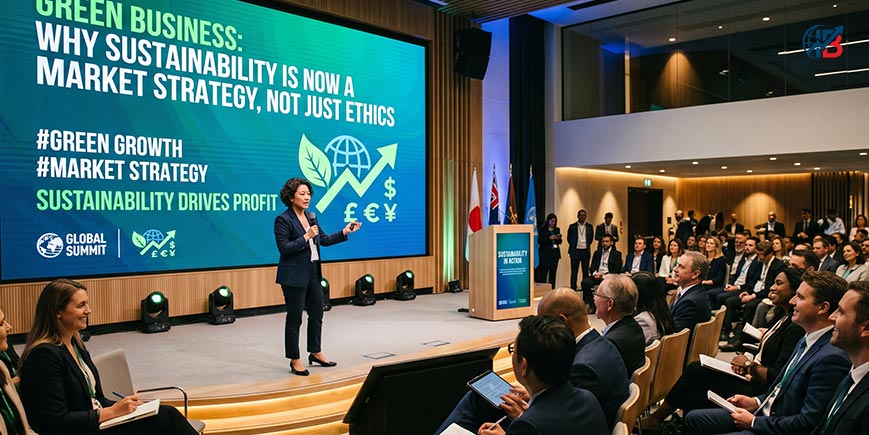
Green Business: Why Sustainability is Now a Market Strategy, Not Just Ethics
Sustainability was once considered a cost — a box to tick for corporate social responsibility reports. In 2026, it is one of the most powerful market strategies a business can deploy. Companies that embrace environmental responsibility are not just saving the planet; they are winning customers, attracting talent, and outperforming competitors.
The data is compelling. A global survey of consumers found that over 70% are willing to pay a premium for products from environmentally responsible brands. Millennials and Gen Z, now the largest consumer demographic, actively reward sustainable businesses and penalize those that fall short. For any brand targeting these audiences, sustainability is not optional — it is existential.
Investors have taken notice too. ESG (Environmental, Social, and Governance) investing has crossed $40 trillion globally. Institutional investors are increasingly directing capital toward companies with strong sustainability profiles and away from those with poor environmental records. The financial market has spoken: green is good business.
But sustainability as a market strategy goes deeper than green packaging and carbon offset schemes. The most forward-thinking companies are redesigning their entire value chain. From sourcing raw materials ethically to reducing energy consumption in manufacturing, from minimizing packaging waste to creating circular economy models where products are designed to be repaired, recycled, or repurposed.
IKEA’s goal of becoming fully circular, Patagonia’s pledge to donate 1% of sales to environmental causes, and Unilever’s Sustainable Living brands — which grew 69% faster than the rest of its portfolio — all point to the same truth: sustainability drives growth.
For businesses in India and emerging markets, the opportunity is enormous. With government incentives for green businesses, growing domestic consumer awareness, and global supply chains demanding sustainability credentials from suppliers, the time to act is now.
The shift from seeing sustainability as a burden to viewing it as a business advantage is one of the defining transitions of this decade. Companies that make this mental leap first will enjoy lasting competitive advantages.
