
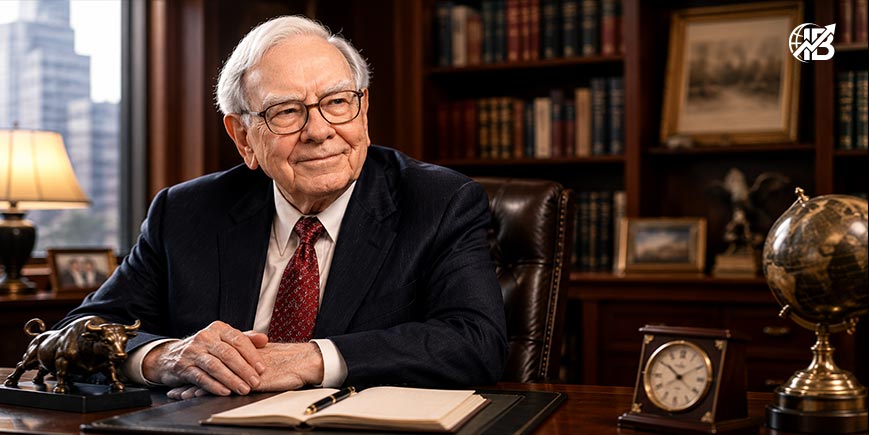
Warren Buffett: The Quiet Genius of Patient Capital
How the Oracle of Omaha Built the World’s Most Admired Investment Empire
Warren Buffett is the most successful investor in human history, and his story is, in many ways, a deliberate rebuke of almost everything modern finance culture celebrates. There is no Silicon Valley drama, no moonshot gamble, no pivot to disruption. Instead, there is a man in Omaha, Nebraska, who has sat at the same desk for six decades, read voraciously, thought carefully, and compounded wealth with a patience most investors cannot sustain for six months, let alone six decades.
Born in Omaha in 1930, Buffett displayed an entrepreneurial instinct almost from birth. He sold chewing gum door-to-door at age six, delivered newspapers as a teenager, and filed his first tax return at 13, claiming his bicycle as a business deduction. By the time he was a teenager, he had already generated thousands of dollars through various small business ventures.
His intellectual foundation was built by Benjamin Graham, the Columbia Business School professor whose seminal text ‘The Intelligent Investor’ introduced Buffett to the concept of value investing — buying businesses for less than their intrinsic value, with a ‘margin of safety’ that protected against error. Buffett applied to Columbia specifically to study under Graham, was initially rejected, and was ultimately admitted. The relationship proved transformative.
After working briefly for Graham’s investment firm, Buffett returned to Omaha and started his own investment partnership in 1956 with $100 from seven partners. He delivered extraordinary returns consistently through the late 1950s and 1960s, and eventually used the partnership’s assets to take control of a struggling textile company called Berkshire Hathaway.
Over the following decades, he transformed Berkshire from a failing textile business into a conglomerate holding company with ownership stakes in some of America’s most iconic businesses: Coca-Cola, American Express, GEICO, Apple, Bank of America, and dozens of others. His strategy remained consistent throughout: buy exceptional businesses run by honest, capable management at fair prices, and hold them for the long term.
What distinguished Buffett from other investors was not just his analytical ability but his emotional discipline. He resisted the dot-com boom of the 1990s when technology stocks were making everyone around him rich, insisting he didn’t invest in things he didn’t understand. He was mocked and called out of touch. When the bubble burst in 2000, Berkshire’s conservatism was vindicated. His equanimity during market panics — buying aggressively when others were selling in fear — is legendary.
Buffett’s personal life is as famous as his investment record. He lives in the same house he bought in Omaha in 1958 for $31,500. He drives himself to work. He eats breakfast from McDonald’s most mornings. He earns a salary of $100,000 per year from Berkshire — while being worth over $100 billion. He has pledged to donate over 99% of his wealth to philanthropy, primarily through the Bill & Melinda Gates Foundation.
His annual letter to Berkshire shareholders is perhaps the most widely read document in the investment world, celebrated for its clarity, honesty, and wit. He writes about mistakes candidly — not to apologize but to illuminate — and his ability to explain complex financial concepts in plain language reflects a mind that has truly understood what most can only describe.
For business leaders and investors alike, the Buffett lesson is uncomfortable in its simplicity: find good businesses, buy them at rational prices, and get out of the way. In a culture of constant action, his genius lay in disciplined inaction. The most important investment decisions he ever made, he has said, were the ones he chose not to make.
