
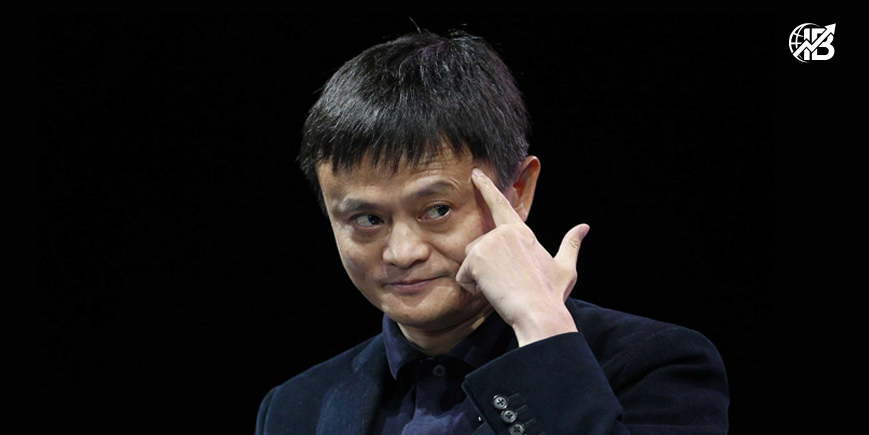
Jack Ma: From Rejected to Revolutionary
The Unlikely Rise of China’s Most Famous Entrepreneur
Jack Ma’s story reads like a parable written to teach the world that persistence is the most undervalued business skill. The founder of Alibaba was rejected from Harvard ten times. He failed his university entrance exams twice. He applied for 30 jobs after graduating and was turned down for all of them — including a position at KFC, the only one of 24 applicants not hired. From those beginnings, he built the largest e-commerce ecosystem on earth.
Born in Hangzhou, China in 1964, Ma Yun — who later adopted the name Jack — grew up during the Cultural Revolution, a period of immense political and economic turbulence. To learn English, he spent nine years cycling to a nearby hotel to practice with foreign tourists, sometimes before dawn. He eventually earned a bachelor’s degree in English education and began teaching English at a university, earning the equivalent of $12 a month.
His first encounter with the internet came in 1994, during a trip to the United States. Typing ‘beer’ into a search engine, he found results from every country except China. ‘Chinese beer’ returned nothing. The absence was the opportunity. He returned to China and founded China Yellow Pages, one of the country’s first internet companies. It failed. Undeterred, he tried again.
In 1999, from his apartment in Hangzhou, Ma gathered 17 friends and co-founded Alibaba with $60,000 pooled from their personal savings. The pitch was simple: create a platform that connected Chinese manufacturers with global buyers. At the time, most Western internet companies were building for consumers in rich countries. Ma targeted the global supply chain, seeing an opening nobody else had identified.
The timing coincided with the dot-com boom — and the subsequent bust. While most internet companies collapsed in 2001, Alibaba survived by focusing on real business utility rather than speculation. By 2003, Ma launched Taobao, a consumer-to-consumer marketplace that took on eBay in China. He offered it for free, undercutting eBay’s fee-based model. Within three years, Taobao had driven eBay out of the Chinese market.
Alipay followed in 2004, solving the critical trust problem in online commerce — how do buyers and sellers who don’t know each other transact safely? By holding funds in escrow until goods were delivered, Alipay built the financial infrastructure for China’s e-commerce explosion. It later became Ant Group, briefly the world’s most valuable fintech company before regulatory intervention.
Alibaba went public on the New York Stock Exchange in 2014 in what became the largest IPO in history at the time, raising $25 billion. Ma, who had started with $60,000 from friends, became China’s richest person. Yet he consistently projected humility, telling young people that his success came not from being smart but from being willing to learn from his mistakes and try again.
Ma’s leadership style was warm, theatrical, and often philosophical. He frequently quoted traditional Chinese wisdom, spoke about the importance of emotional intelligence over IQ, and emphasized culture and values as the ultimate competitive moat. He stepped down as Alibaba’s chairman in 2019, handing leadership to Daniel Zhang, and retreated to focus on education and philanthropy.
Jack Ma’s journey offers a distinctive message for today’s leaders: market opportunity is rarely found in the obvious places. The spaces being ignored, the customers being underserved, the problems everyone considers too hard — these are where the most durable businesses are built. Ma found his opportunity not in Silicon Valley’s spotlight, but in a gap in a search engine result.
