
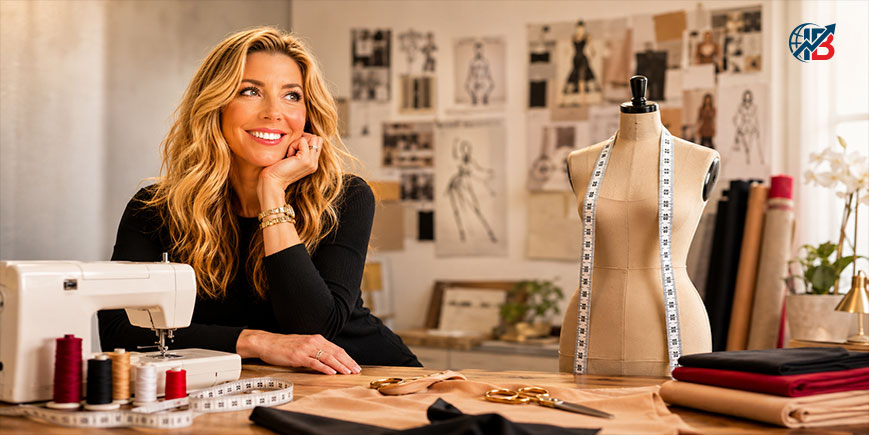
Sara Blakely: The Billion-Dollar Idea Sewn from Frustration
How SPANX’s Founder Turned Everyday Annoyance into a Global Empire
Before she became the youngest self-made female billionaire in history, Sara Blakely was selling fax machines door-to-door in Florida, consistently being told no, and learning to absorb rejection as a professional skill. That training, unlikely as it was, became the foundation of one of the most successful product launches in American entrepreneurial history.
Born in Clearwater, Florida, in 1971, Blakely grew up in a household where failure was reframed as a learning tool. Her father, a trial lawyer, would regularly ask his children at the dinner table: ‘What did you fail at this week?’ The question was not an accusation but an encouragement — an attempt to normalize risk-taking and disconnect a person’s worth from their outcomes. It was a lesson that would prove invaluable.
After college and a brief, unsuccessful attempt to become a lawyer (she failed the LSAT twice), Blakely took a job selling fax machines, eventually becoming a national sales trainer. At 27, she came up with an idea that would change the apparel industry. Preparing for a party and frustrated by visible undergarment lines and the unflattering effect of traditional pantyhose, she cut the feet off a pair of control-top hose and discovered that the result was exactly what she had been looking for.
She spent two years researching and developing the product in her spare time, investing $5,000 of her personal savings — her entire life savings — to patent the design and create a prototype. She wrote the patent herself after purchasing books on patent law to avoid legal fees. She drove to mills in North Carolina to find a manufacturer willing to produce her product. She was turned down repeatedly by men who simply couldn’t see the market she was describing.
One hosiery mill owner eventually agreed, later sharing that his daughters had persuaded him the idea was brilliant after he described it to them. Blakely then wrote her own retail pitch, called Neiman Marcus cold, convinced a buyer to take five minutes to watch a demonstration in a bathroom (where she put the product on and showed the difference), and walked out with a purchase order.
She launched SPANX in 2000 with no advertising budget and no media training. She sent gift baskets to Oprah Winfrey’s stylist. It worked — Oprah named SPANX one of her Favourite Things in 2000, and overnight the business transformed. By 2001, SPANX was generating $4 million in sales. By 2012, Forbes estimated the company’s value at $1 billion and named Blakely the world’s youngest self-made female billionaire.
What distinguished SPANX’s growth was the authenticity of its marketing. Blakely was the product’s most credible spokesperson because she was its original customer. She appeared in her own marketing, spoke candidly about the frustrations that inspired the product, and built a brand personality centered on humour, honesty, and female empowerment — long before those were fashionable brand values.
In 2021, Blakely sold a majority stake in SPANX to private equity firm Blackstone for a reported $1.2 billion. She marked the occasion by gifting every SPANX employee $10,000 and two first-class round-trip airline tickets—a gesture consistent with the culture of generosity and human-centered leadership she had built over two decades.
Sara Blakely’s story is a masterclass in the power of customer-centric innovation. She didn’t set out to disrupt a billion-dollar industry. She tried to solve her own problem and trusted that if the problem was real for her, it was real for millions of others. For business leaders, her journey underscores a fundamental truth: the best product ideas are often hiding in plain sight, in the small frustrations of everyday life.
